

Design Systems Development creates cohesive, scalable frameworks that ensure design consistency across all digital products while accelerating development. Research shows that using a design system can accelerate the development of a simple form by 47% compared to coding from scratch, with broader studies showing an average efficiency increase of 38% for design teams and 31% for development teams(Sparkbox).
Who needs Design Systems?
- Enterprise organisations managing multiple products
- Growing startups scaling their design operations
- Product teams seeking consistency across platforms
- Organisations streamlining design workflows
- Companies reducing design and development friction
What is a Design System?
A Design System is a complete set of standards, documentation, and reusable components that unify product development across an organization. It serves as a single source of truth for design decisions, reducing inconsistencies and accelerating product development.
Key Components of Professional Design Systems
Component Library
Develop and document a comprehensive library of accessible, reusable UI components that ensure cross-platform consistency.
Design Principles and Guidelines
Establish clear design principles and visual standards that align with brand values across all digital touchpoints.
Design Tokens
Create and manage foundational design elements through a structured token system that enables seamless development integration.
Documentation and Governance
Build comprehensive documentation with clear processes for implementation, contribution, and system maintenance.

Why Design Systems Development Matters
✓ Efficiency: Teams using a design system can deliver components up to 47% faster than coding from scratch (Sparkbox, 2022)
✓ Consistency: Design systems help reduce UI inconsistencies and improve workflow quality by 38% on average (UX Collective, 2021)
✓ Cost Savings: Companies using design systems report 30–40% reduction in design and development time, leading to measurable cost savings (InVision Design Systems Report, 2020)
Benefits of Design Systems Development Services
Implementing design systems can enhance team collaboration by providing a shared framework, leading to more cohesive and efficient workflows across design and development teams (Forrester Research, 2022)
My Design Systems Development Process
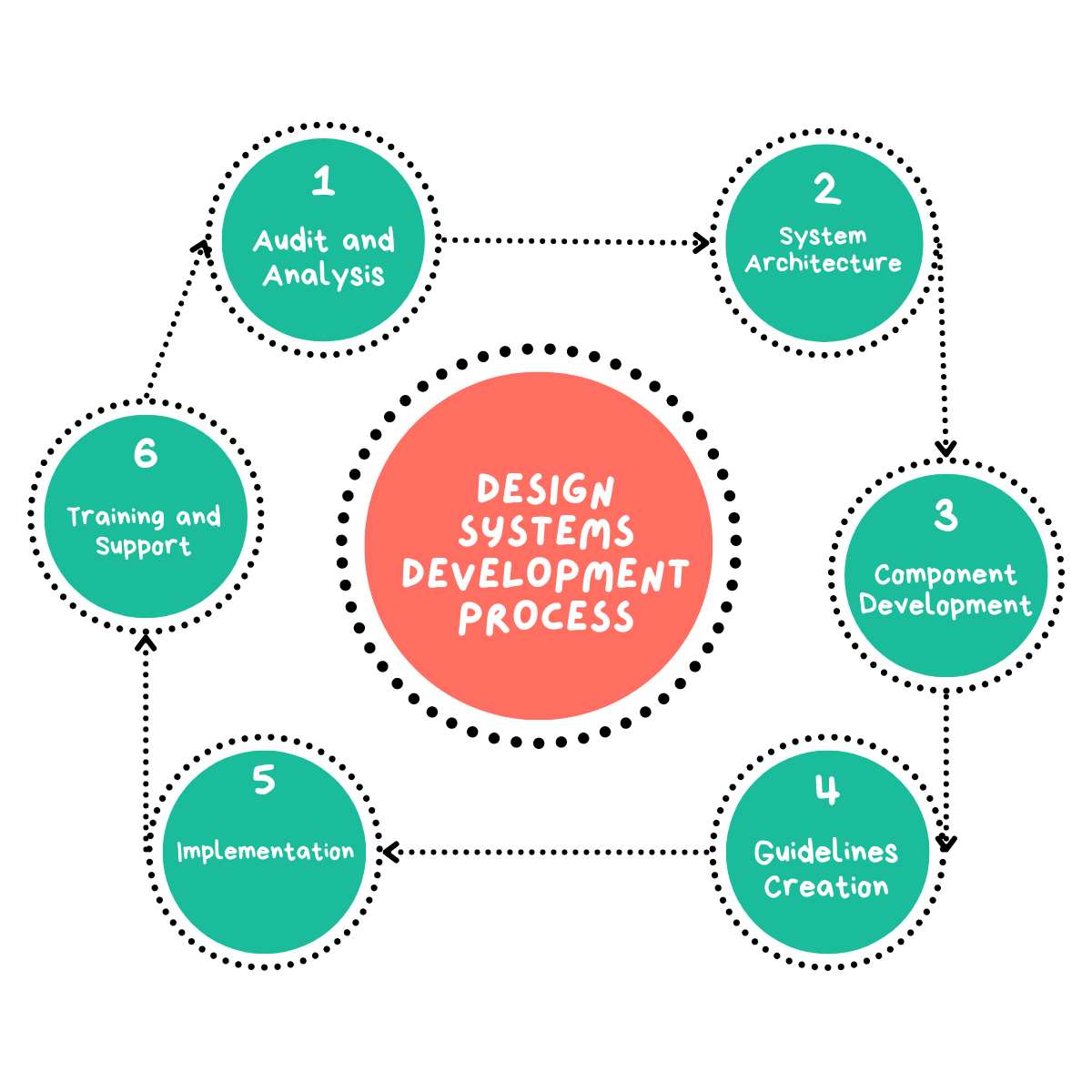
Audit and Analysis: I examine the current design elements, looking for recurring components and styles to inform the foundation of the design system.
System Architecture: I create a comprehensive framework that outlines how different elements of the system will be organised and interact with each other.
3 Component Development: I design and build a library of versatile interface elements, ensuring each is well-documented for ease of use and consistency across projects.
Guidelines Creation: I establish clear rules and best practices for using the design system, covering aspects such as typography, colour usage, spacing, and component implementation.
Implementation: I integrate the system into the relevant software and platforms, ensuring it’s readily accessible and functional for both designers and developers.
Training and Support: I organise workshops and create resources to help team members understand and effectively use the design system, offering continued assistance as needed.
Why Choose UserFirst UX for Your Design Systems Development?
With extensive experience in Design Systems Development, I offer:
Scalable Solutions:
Creating design systems that grow with your business
Cross-Functional Expertise
Bridging the gap between design and development teams.
Performance Optimisation
Ensuring your design system enhances product performance.
Accessibility Integration
Building accessibility into the core of your design system.
Customised Approach
Tailoring the design system to your specific brand and product needs.